

Paying out of pocket isn’t the only way to access psychotherapy in California. Medi-Cal covers mental health services at essentially no cost to members, and some health plans may reimburse eligible out-of-network therapy expenses. If you’re looking for no-insurance psychotherapy in California, first consider whether you qualify for public coverage, can use out-of-network benefits, or need a private-pay arrangement.
The cost can shape whether care feels possible, but the route depends on coverage and the kind of support you need. This guide explains how to find California therapists, assess affordability without assuming a standard session fee, and understand when out-of-network reimbursement may apply. It also clarifies what a superbill can and can’t do, so you can weigh the financial terms alongside the quieter question of what kind of therapeutic relationship might help.
Key Takeaways
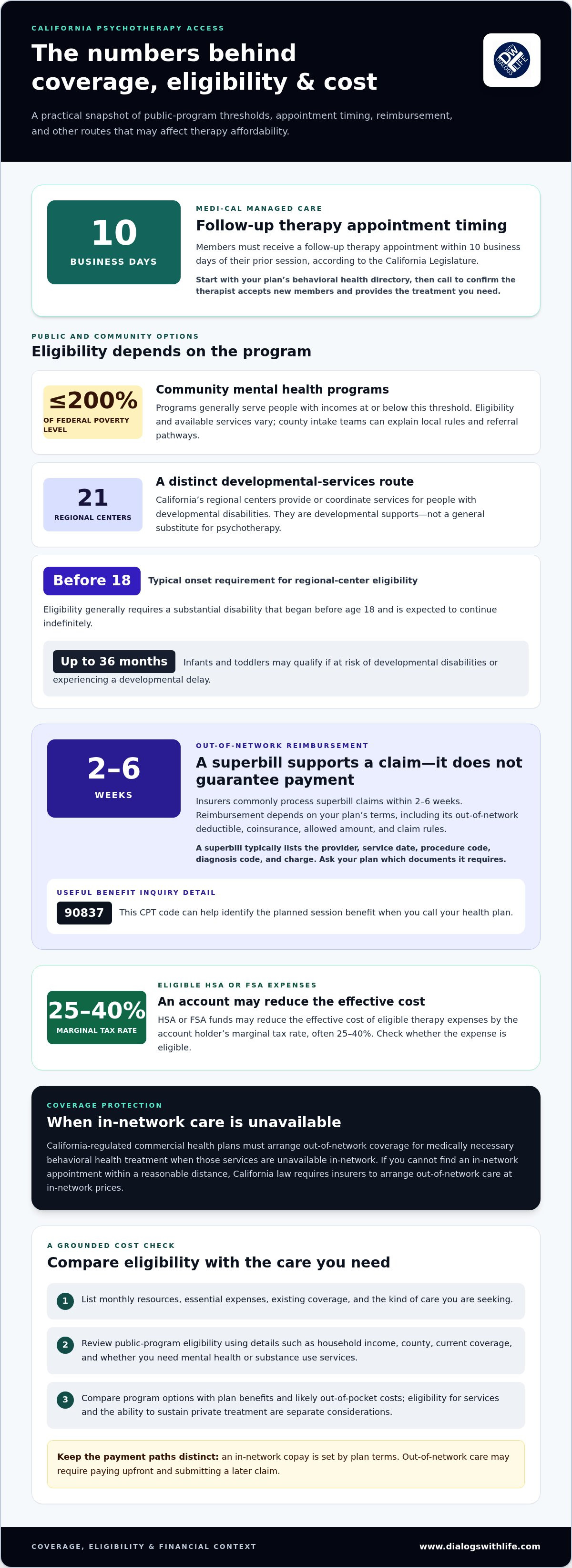
- Explore Medi-Cal and community mental health programs as possible routes to lower-cost care. Medi-Cal managed care members must receive follow-up therapy appointments within 10 business days of their prior session, according to the California Legislature.
- Ask your health plan about out-of-network behavioral health benefits and what documentation it requires. A superbill can support a reimbursement claim, but it doesn’t guarantee payment.
- Assess affordability by considering eligibility for public or community programs, your plan’s deductible and coinsurance, and whether you can use eligible HSA or FSA funds.
- Compare the available paths with the kind of support you’re seeking, so financial constraints and therapeutic fit are considered together.
Finding California therapists through directories
Start with your Medi-Cal plan’s behavioral health directory and search for outpatient therapy. Call the plan to confirm which listed therapists accept new members and provide the treatment you need. Under SB 221, California Medi-Cal managed care members must receive follow-up therapy appointments within 10 business days of their prior session, according to the California Legislature.
Without Medi-Cal, search therapist directories by your California city, “sliding scale,” and preferred language. Try terms such as “Spanish-speaking therapist” or “Mandarin Chinese therapist,” then narrow results by the concern you want help with and whether you prefer telehealth or in-person care. County mental health clinics and community programs may also offer no-insurance psychotherapy in California, sometimes with sliding-scale fees for eligible people.
What should I ask a therapist about fees, sliding scales, and cancellation policies before starting? Ask how the fee is set, whether a sliding scale is available, which payment methods are accepted, and what happens if you cancel or miss an appointment. The Centers for Medicare & Medicaid Services says uninsured patients have the right to a Good Faith Estimate of expected medical-service charges.
Can California residents without insurance get psychotherapy at a county mental health clinic? Yes. County mental health programs and community clinics may provide services directly or by referral. Eligibility and fees depend on local program rules, so ask the county intake team which options may fit your situation.
Ask whether HSA or FSA funds can pay for eligible therapy expenses. These accounts may reduce the effective cost by the account holder’s marginal tax rate, often 25-40%.
How can someone in California get urgent mental health care without insurance? If you’re at risk of harming yourself, call or text 988 for the National Suicide Prevention Lifeline, according to the Substance Abuse and Mental Health Services Administration.
Out-of-network reimbursement and superbills
Out-of-network care means your therapist does not participate in your health plan’s network. Some plans, particularly PPOs, may reimburse part of eligible therapy expenses. Your costs depend on the plan’s out-of-network deductible, coinsurance, allowed amount, and claim rules. California-regulated commercial health plans must arrange out-of-network coverage for medically necessary behavioral health treatment when those services are unavailable in-network.
Before booking, call the number on your insurance card and ask about outpatient mental health benefits. Ask whether counseling for a mental health or substance use disorder is covered out-of-network, whether you need authorization, and how the deductible and reimbursement are calculated. Use the therapist’s name and the planned session type; CPT code 90837 can help identify the benefit you’re asking about. Confirm whether the plan accepts superbills and what claim documents it needs.
A superbill is an itemized document from an out-of-network therapist that supports your reimbursement claim. It typically records the provider, service date, procedure code, diagnosis code, and charge. Some therapists provide these monthly. Insurers commonly process superbill claims within 2-6 weeks, though payment is based on your plan’s terms. A superbill alone doesn’t determine the reimbursed amount.
Keep the distinction clear: an in-network copay is set by plan terms, while out-of-network payment may involve upfront payment and a later claim. If you can’t find an in-network appointment within a reasonable distance, California law requires insurers to arrange out-of-network care at in-network prices. For a thoughtful exploration of psychotherapy and therapeutic fit, consider how the work you seek aligns with the practical realities of coverage.
Eligibility and financial assessment
Begin by separating eligibility for coverage from the cost of care. Medi-Cal eligibility is redetermined annually, and covered mental health services depend on your eligibility, managed care plan, and treatment needs. Review household income, current coverage, county, and whether you’re seeking mental health or substance use services. These details can shape which public programs or referrals may apply.
California community mental health programs generally serve people with incomes at or below 200% of the federal poverty level. Eligibility and available services vary by program, so a county mental health program can clarify its intake process and referral pathways. Federally qualified health centers and community clinics also take Medi-Cal and may provide therapy on site or by referral. Consider these routes before deciding that private payment is the only option.
Regional centers address a different eligibility pathway. California has 21 regional centers that provide or coordinate services for people with developmental disabilities. Eligibility generally requires a substantial disability that began before age 18 and is expected to continue indefinitely. Infants and toddlers up to 36 months old may qualify when at risk of developmental disabilities or experiencing a developmental delay. Regional center services are developmental supports, not a general substitute for psychotherapy.
For a practical cost assessment, list your monthly resources, essential expenses, existing health coverage, and the care you’re seeking. Compare program eligibility with any available plan benefits and likely out-of-pocket costs. This helps distinguish eligibility for mental health services from the ability to sustain ongoing private treatment. If you’re drawn to reflective work, spiritual and depth psychology may help you clarify what you’re seeking from therapy.
Dialogs with Life: Individual Psychotherapy
Dialogs with Life offers Individual Psychotherapy for people seeking space to explore difficult experiences with care and depth. Its approach includes Spiritual & Depth Psychology, which may suit people exploring questions of meaning, recurring patterns, or inner conflict. The practice also offers support for grief, loss, and life transitions, providing a setting to reflect on what has changed and what remains unresolved.
A Free Introductory Session is an opportunity to discuss what brings you to therapy and whether the approach feels relevant to your needs. You can describe the concerns you want to explore in individual therapy, including grief and loss, and consider whether the therapeutic fit feels right.
If this approach feels aligned with what you’re seeking, visit Dialogs with Life.
Choose a Next Step That Feels Considered
Finding no-insurance psychotherapy in California involves more than calculating the cost. It also means considering what kind of attention and understanding you need. Start by naming the concerns you want to bring to therapy and what would help you feel ready to begin.
Dialogs with Life offers Individual Psychotherapy grounded in Spiritual & Depth Psychology, along with a Free Introductory Session. The introductory conversation can help you explore whether this approach fits what you’re facing, whether grief, change, or questions of meaning are at the center. You don’t need a polished explanation of your experience; uncertainty can be part of the conversation.
Let your next step be thoughtful, not perfect. Seeking support can begin with a willingness to look more closely.
Frequently Asked Questions
How much does psychotherapy cost out of pocket in California?
There is no single out-of-pocket rate for psychotherapy in California. Costs depend on the therapist, session format, location, and treatment needs. Ask about the fee and expected frequency before starting, then compare the total with your monthly budget. If you’re uninsured, the Centers for Medicare & Medicaid Services says you have the right to receive a Good Faith Estimate of expected medical-service charges.
Where can uninsured people find low-cost or sliding-scale therapy in California?
Explore your county mental health program, federally qualified health centers, and community clinics. These services may provide care or connect you with a referral, and some community programs offer sliding-scale fees to eligible residents. When contacting an intake office, explain that you’re uninsured and ask which programs assess eligibility, what documents they use, and whether outpatient counseling is available.
Does California offer free mental health counseling or community mental health services?
Yes. Medi-Cal covers mental health services at essentially no cost to members, and community mental health programs may offer low-cost services based on eligibility. What “free” means depends on Medi-Cal eligibility, the specific covered service, and local program criteria. Ask the county intake team about its services and referrals for ongoing counseling.
How can I find a therapist in California who offers reduced fees or payment plans?
Search therapist directories for terms such as “sliding scale” and your California city, then contact therapists whose approach fits your needs. Ask whether reduced fees are available, what information is used to determine eligibility, and whether payment arrangements are offered. Before starting, request the fee in writing and clarify how billing works if your circumstances or appointment frequency change.
How do community clinics and nonprofit counseling centers compare with private-pay therapy in California?
Community clinics and nonprofit centers may connect care to Medi-Cal eligibility, local programs, or sliding-scale criteria. Private-pay therapy means arranging payment directly with an individual therapist. The difference is how access and costs are determined: public and community options follow program criteria, while private care follows the therapist’s payment terms. Consider which route fits your needs and finances.


