

What is Contemplative Psychotherapy? A Synthesis of Awareness and Depth
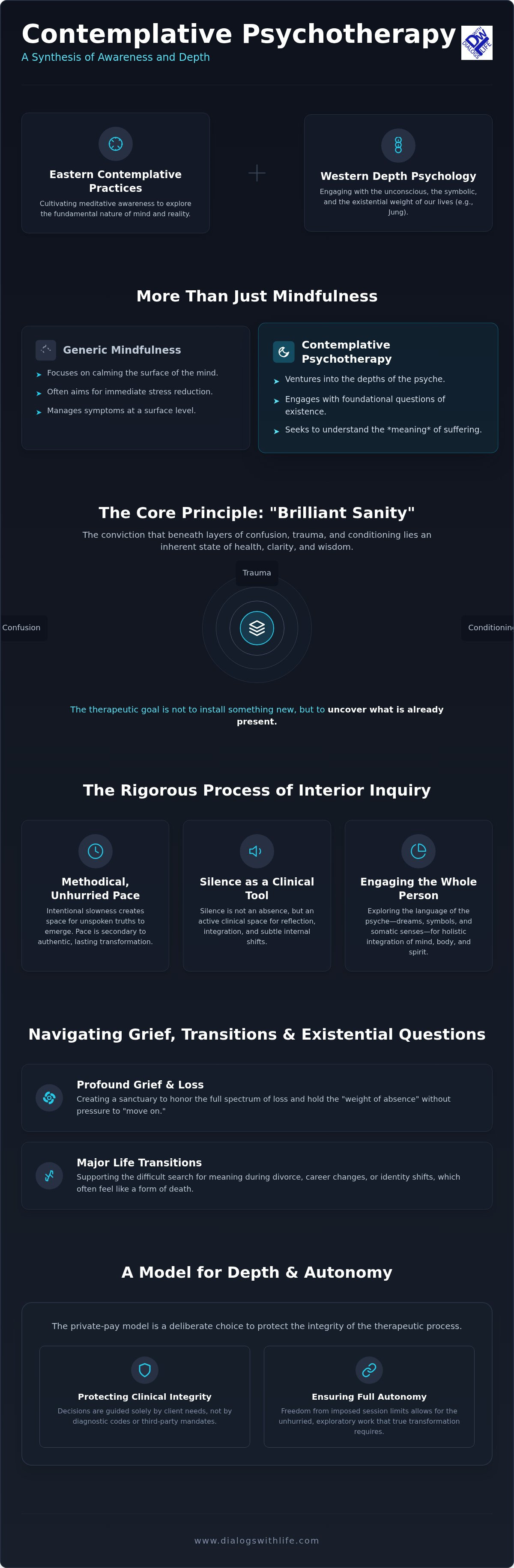
In a culture that often prioritizes immediate solutions and the swift management of symptoms, Contemplative psychotherapy stands apart as a rigorous clinical approach dedicated to a more profound inquiry. It is a synthesis of two powerful traditions: the meditative awareness cultivated in Eastern contemplative practices and the rich, exploratory frameworks of Western depth psychology. This modality is not merely "mindfulness" rebranded; it moves beyond simple stress reduction to engage with the foundational questions of the human condition.
Where generic mindfulness may focus on calming the surface of the mind, contemplative psychotherapy ventures into the depths. It honors the unconscious, the symbolic, and the existential weight of our lives. The therapist's role is not to prescribe or fix, but to serve as an unwavering witness to the client’s internal world. The therapeutic relationship becomes a container for exploring the unspoken, favoring genuine insight over superficial relief. This approach acknowledges that what often presents as anxiety or depression is, at its core, a "crisis of soul"—a profound disorientation that arises during the inevitable transitions of a modern life.
The Integration of Meditative Insight and Depth Psychology
The practice of contemplative psychotherapy exists at a unique historical and philosophical intersection. It draws from the wisdom of contemplative traditions, which have for millennia explored the nature of mind and reality, and integrates these insights with the pioneering work of Western thinkers like Carl Jung and existential philosophers. This is not an arbitrary blend, but a coherent framework for understanding human suffering and potential.
A core tenet of this approach is the concept of "brilliant sanity"—the conviction that beneath layers of confusion, trauma, and conditioning lies an inherent state of health, clarity, and wisdom. The therapeutic dialog is not about installing something new into the individual, but about uncovering what is already present. Through sustained, compassionate awareness, the client and therapist work together to clear away the obscurations, allowing this fundamental sanity to emerge and inform the client’s life.
The Rigorous Process of Interior Inquiry and Dialog
A contemplative psychotherapy session unfolds at a methodical, unhurried pace. In a world of constant stimulation and demand, this intentional slowness creates the necessary space for the unspoken to emerge. It is within the pauses and the quiet moments that the deeper truths of our experience often reveal themselves. Silence is not treated as a passive absence but as an active clinical tool—a space for reflection, integration, and the subtle shifts of internal awareness.
To those accustomed to the rapid-fire protocols of some behavioral therapies, this process might seem "slow." This objection is understandable, yet it mistakes pace for progress. Contemplative work reframes this slowness as the duration required for authentic and lasting psychological transformation. True change is not a quick fix; it is a gradual, organic process of unfolding. The therapeutic relationship itself becomes the primary vehicle for this work, a "dialog with life" where the client’s patterns, fears, and aspirations can be seen and held with clarity and non-judgment. The aim is not simply to feel better, but to develop a more profound and honest relationship with oneself and with reality as it is.
Engaging the Unconscious: Beyond Modern Symptomatology
Modern psychotherapy is often preoccupied with symptomatology—the identification and reduction of measurable symptoms. While valuable, this focus can neglect the underlying sources of distress. Contemplative inquiry, in contrast, engages the whole person, including the vast and often-ignored territory of the unconscious. It stands in contrast to behavioral models that seek only to "fix" or "adjust" the individual to fit societal norms.
This deeper engagement is facilitated by paying close attention to the language of the psyche: dreams, symbols, creative expressions, and somatic felt-senses. By exploring these non-linear, intuitive forms of knowing, a more complete picture of the self begins to form. This process moves beyond a purely cognitive understanding, inviting a holistic integration of mind, body, and spirit. It is a commitment to understanding the *meaning* of one's suffering, not just its management, which is a cornerstone of depth psychology for existential dread.
Navigating Grief and Transitions Through a Contemplative Lens
Contemplative psychotherapy is uniquely suited to accompany individuals through periods of profound grief, loss, and existential upheaval. Rather than attempting to hasten the grieving process or provide placating answers, this approach teaches one how to hold the "weight of absence." It creates a sanctuary where the full spectrum of loss—its sorrow, its anger, its emptiness—can be honored without the pressure to "move on."
Major life transitions, such as divorce, career changes, retirement, or shifts in identity, are often experienced as a form of death. The old self and the old reality are gone, leaving a disorienting void. In this space, contemplative inquiry supports the difficult search for meaning. It allows for an honest reflection on mortality, impermanence, and the fundamental questions of the human condition. The therapeutic space becomes a vessel for this profound work, affirming that the path of individual psychotherapy is a courageous commitment to self-knowledge, especially when facing the depths of loss. For those navigating the specific pain of bereavement, this approach offers a way to engage with, rather than retreat from, the reality of absence, a core focus of counseling for bereavement.
Seeking Depth and Autonomy in the California Landscape
Life in California, with its unique blend of innovation, pressure, and constant change, can create a particular kind of spiritual and existential stress. The relentless pace and the emphasis on external achievement can leave many feeling disconnected from their inner lives, searching for a philosophical anchor in a sea of superficiality. Contemplative psychotherapy offers a grounded, substantive alternative to the fleeting wellness trends that proliferate in this environment.
The private-pay model at Dialogs with Life is a deliberate choice designed to protect the integrity and depth of this work. By operating outside the constraints of the insurance system, we ensure that clinical decisions are guided solely by the client's needs, not by diagnostic codes or session limits imposed by third-party payers. This structure grants both therapist and client the autonomy to engage in the unhurried, exploratory process that true transformation requires, fostering a therapeutic relationship built on trust and a shared commitment to depth.
Frequently Asked Questions
How does contemplative psychotherapy differ from standard cognitive behavioral therapy (CBT)?
While CBT focuses on identifying and changing specific thought patterns and behaviors to alleviate symptoms, contemplative psychotherapy takes a broader and deeper approach. It is less concerned with "fixing" thoughts and more interested in cultivating a different relationship to them through meditative awareness. The focus is on underlying existential themes, the unconscious, and the development of insight, rather than on symptom reduction as the primary goal.
Is contemplative psychotherapy a religious practice or a clinical one?
It is a clinical practice that integrates principles and techniques from contemplative traditions, primarily Buddhism, into a Western psychological framework. While it addresses themes of a spiritual or existential nature, it does not require adherence to any religious doctrine. The emphasis is on direct experience and personal inquiry, making it accessible to individuals of any faith or of no faith at all.
Can this approach help with complicated grief and long-term bereavement?
Yes, this approach is particularly well-suited for the complexities of grief and bereavement. Instead of imposing a timeline or a set of stages for grieving, it provides a supportive space to explore the unique landscape of one's loss. It helps individuals learn to be present with profound sorrow and find meaning in the midst of absence, which can be essential when grief becomes persistent or complicated. This is a central part of therapy for complicated grief.
Why should I choose a private-pay therapist for depth-oriented work?
A private-pay model ensures complete confidentiality and clinical autonomy. Insurance companies often require a formal diagnosis and can dictate the type and duration of therapy. For depth-oriented work, which is by nature exploratory and long-term, these constraints can be counterproductive. The private-pay structure allows the therapeutic process to be guided by your unique needs and pace, fostering a more authentic and unconstrained therapeutic dialog.


